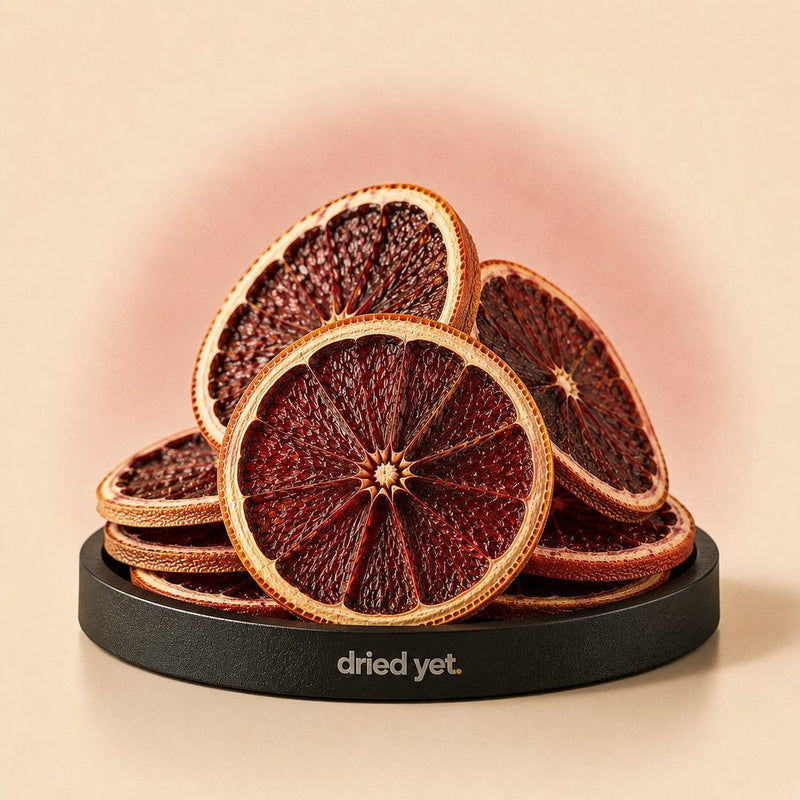
Fresh vs. Dehydrated Cocktail Garnishes: What Changes Behind the Bar?
Compare fresh and dehydrated cocktail garnishes across prep, waste, consistency, storage, presentation and menu planning without assuming one format is right for every drink.
Fresh and dehydrated cocktail garnishes solve different problems. Fresh fruit gives a bar access to expressed oils, freshly cut wedges and squeezed citrus. Dehydrated fruit removes the cutting step at service and gives the team a prepared garnish with a repeatable shape and appearance. The right choice depends on what the drink needs and how the bar operates.
Fresh garnish: where it remains useful
Fresh citrus is the right tool when the drink depends on an expressed peel, a squeezed wedge, muddled fruit or another preparation that contributes juice or fresh oils to the recipe. A dehydrated wheel should not be treated as a substitute for an ingredient that the drink actually needs.
Dehydrated garnish: where it can simplify service
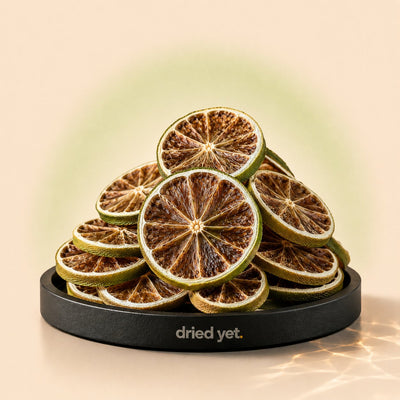
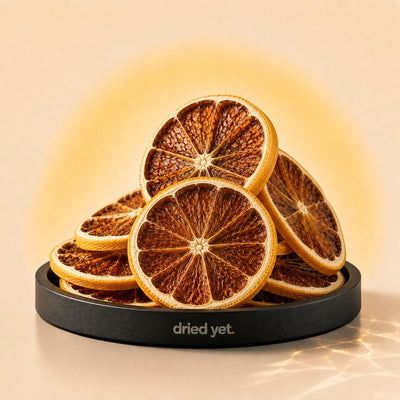
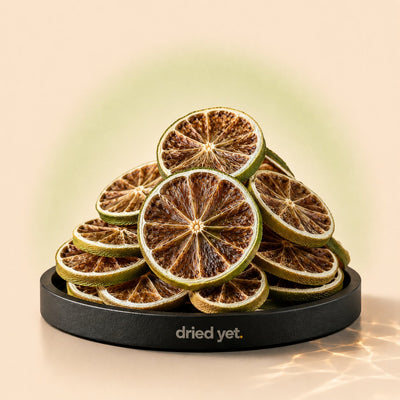
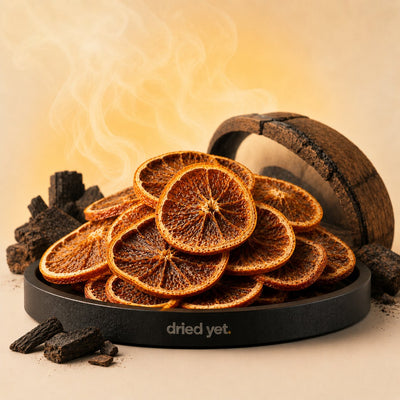
For drinks where the garnish is primarily visual and aromatic, a prepared dehydrated wheel can reduce the need to slice fruit during prep or service. The team can pull a consistent garnish from a sealed package instead of producing a new batch of wheels every shift. That distinction is especially useful when a beverage program wants repeatable presentation across bartenders, shifts or locations.
Compare the operating questions that matter
| Question | Fresh garnish | Dehydrated garnish |
|---|---|---|
| Does the drink need fresh juice or expressed oils? | Often the better fit | Use only as a separate garnish |
| Does the team want a ready-to-use wheel? | Requires cutting/prep | Prepared before service |
| Is visual consistency important? | Varies with fruit and cutting | Designed for a repeatable garnish format |
| Is the garnish mainly decorative/aromatic? | Works | Often a practical option |
| Does the bar need to measure prep and waste? | Track actual fruit, labor and discard | Compare against actual dried-garnish usage |
Do not guess the savings
The economics are different for every operation. Fruit cost, staff labor, drinks sold, cutting standards, waste and garnish usage all change the result. That is why Dried Yet. is building the Fresh vs. Dried Garnish Cost & Waste Calculator: the comparison should use your numbers instead of a generic industry average.
A hybrid system is often the practical answer
A bar does not need to choose one format for every drink. Keep fresh citrus where the recipe depends on it, and use dehydrated wheels where the garnish is a finishing element. That makes the decision drink-by-drink instead of ideological. It can also make the garnish station easier to standardize because each item has a defined job.
Map the garnish to the cocktail
Orange, lemon and lime are useful foundations because they connect naturally to familiar cocktail families. Browse the Orange vs. Lemon vs. Lime guide for a side-by-side breakdown, then use the Cocktail Garnishes collection to compare the available Dried Yet. products.
For bars, restaurants, hotels and beverage programs that need a repeatable supply plan, explore the Dried Yet. Bar Program.